

Posters
Category
Applied
Description
A key challenge in the development of injectable drug formulations is the need for multi-dose administration, which increases the risk of bacterial contamination. To reduce this risk, preservatives such as phenol (PhOH) and benzyl alcohol (BzOH) are commonly added to formulations. However, preservatives can aggregate with other critical excipients, particularly surfactants such as polysorbate 20 (PS20). This aggregation leads to physical instability, often observed as turbidity or precipitation. Previous work has shown that preservatives induce the formation of large, unstable aggregates with surfactants at pharmaceutically relevant concentrations. The purpose of this study is to characterize and understand this phenomenon of preservative-surfactant aggregation and explore its effects on drug formulations. Once a baseline of stability is known, the impact of thermocycling, which has been shown to increase the turbidity boundary, can be applied to many different formulations. These turbidity measurements are being found both qualitatively and quantitatively. For the qualitative measurement, samples are determined based on whether the sample is visibly cloudy. Turbidity is measured quantitatively using a UV-Vis spectrophotometer, which measures how much light is transmitted through the sample; any loss in transmitted intensity is due to scattering by large preservative-surfactant aggregates. Furthermore, the impact of thermocycling on solution structure will be investigated using small-angle scattering techniques. Overall, this investigation provides a framework for the pharmaceutical industry to adapt formulation strategies for the broad class of drugs utilizing polysorbate 20 with preservatives.
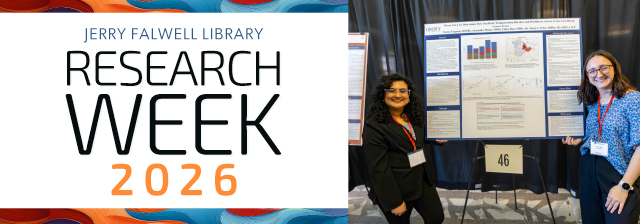
Exploration of Preservative-Surfactant Aggregation Effects on Biologic Drug Formulations
Applied
A key challenge in the development of injectable drug formulations is the need for multi-dose administration, which increases the risk of bacterial contamination. To reduce this risk, preservatives such as phenol (PhOH) and benzyl alcohol (BzOH) are commonly added to formulations. However, preservatives can aggregate with other critical excipients, particularly surfactants such as polysorbate 20 (PS20). This aggregation leads to physical instability, often observed as turbidity or precipitation. Previous work has shown that preservatives induce the formation of large, unstable aggregates with surfactants at pharmaceutically relevant concentrations. The purpose of this study is to characterize and understand this phenomenon of preservative-surfactant aggregation and explore its effects on drug formulations. Once a baseline of stability is known, the impact of thermocycling, which has been shown to increase the turbidity boundary, can be applied to many different formulations. These turbidity measurements are being found both qualitatively and quantitatively. For the qualitative measurement, samples are determined based on whether the sample is visibly cloudy. Turbidity is measured quantitatively using a UV-Vis spectrophotometer, which measures how much light is transmitted through the sample; any loss in transmitted intensity is due to scattering by large preservative-surfactant aggregates. Furthermore, the impact of thermocycling on solution structure will be investigated using small-angle scattering techniques. Overall, this investigation provides a framework for the pharmaceutical industry to adapt formulation strategies for the broad class of drugs utilizing polysorbate 20 with preservatives.
