

Posters
Category
Applied
Description
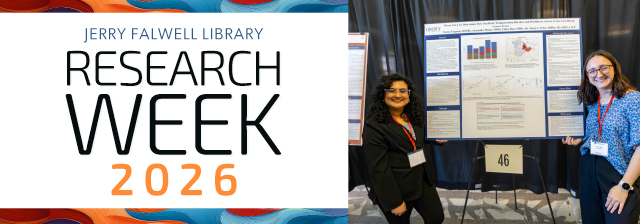
Those who have experienced injustice¿possess¿the freedom¿to forgive¿offenders. The focus of this study is¿to investigate¿how¿third parties evaluate¿a¿forgivers’¿choice¿to extend forgiveness and their¿justification for doing so.¿The two primary motivations behind forgiveness in¿previous literature¿are inner peace and¿maintaining¿relationships.¿As a¿replication¿and¿extension to¿Kim et al. (2026)¿study,¿a¿3 X 2 X 2 factorial design¿was¿conducted¿with¿college students in the United States¿(N =¿260)¿by utilizing vignettes in which the following factors were manipulated: type of relationship¿(parent-child,¿sibling, or¿classmate¿relationship),¿motivation¿(inner peace or relationship maintenance),¿and severity¿(less severe and more severe)¿of offense. Previous literature has¿observed¿a significant effect between¿the motivation for forgiveness and third-parties appropriateness rating.¿Surprisingly, the data did not reveal a significant difference in appropriateness based on the forgiveness motivation¿or due to the severity of the vignette.¿The¿results of the study¿revealed¿the¿main effect¿to¿be within the¿relational context¿in which¿forgiveness occurs, specifically in the parent-child¿condition.¿Considerations¿regarding¿the participants’¿predominantly¿White¿female Christians¿were¿considered.¿Implications¿for clinical practice and future research studies¿should focus on the impact of familial relationships on the maturation of forgiveness.
Evaluations of Forgiveness Motivations within Familial Relationships: Which Forgiveness Motivations are Evaluated More Appropriately?
Applied
Those who have experienced injustice¿possess¿the freedom¿to forgive¿offenders. The focus of this study is¿to investigate¿how¿third parties evaluate¿a¿forgivers’¿choice¿to extend forgiveness and their¿justification for doing so.¿The two primary motivations behind forgiveness in¿previous literature¿are inner peace and¿maintaining¿relationships.¿As a¿replication¿and¿extension to¿Kim et al. (2026)¿study,¿a¿3 X 2 X 2 factorial design¿was¿conducted¿with¿college students in the United States¿(N =¿260)¿by utilizing vignettes in which the following factors were manipulated: type of relationship¿(parent-child,¿sibling, or¿classmate¿relationship),¿motivation¿(inner peace or relationship maintenance),¿and severity¿(less severe and more severe)¿of offense. Previous literature has¿observed¿a significant effect between¿the motivation for forgiveness and third-parties appropriateness rating.¿Surprisingly, the data did not reveal a significant difference in appropriateness based on the forgiveness motivation¿or due to the severity of the vignette.¿The¿results of the study¿revealed¿the¿main effect¿to¿be within the¿relational context¿in which¿forgiveness occurs, specifically in the parent-child¿condition.¿Considerations¿regarding¿the participants’¿predominantly¿White¿female Christians¿were¿considered.¿Implications¿for clinical practice and future research studies¿should focus on the impact of familial relationships on the maturation of forgiveness.
