

Posters
Category
Applied
Description
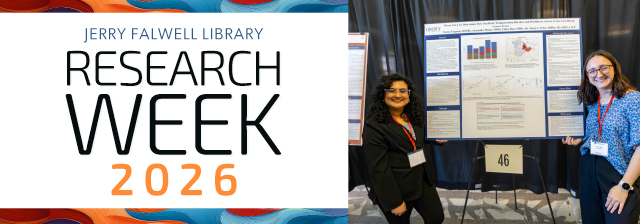
Acute Lymphoblastic Leukemia (ALL) is the most common pediatric cancer, accounting for approximately 30–34% of childhood cancer diagnoses. Early detection is critical for improving survival outcomes; however, many resource-limited settings lack access to advanced diagnostic technologies such as flow cytometry and cytogenetic analysis. Manual microscopy remains widely used but is time-consuming and subject to inter-observer variability, limiting diagnostic efficiency and consistency. This study evaluates the effectiveness of transfer learning using pre-trained ResNet architectures for automated classification of leukemia cells from microscopy images, with a focus on the impact of model depth and fine-tuning strategies. Using the C-NMC Challenge dataset (10,661 training and 1,867 validation images; 68% cancer, 32% healthy), images were resized to 224×224 pixels and normalized to ImageNet standards. Transfer learning was implemented with ResNet18 and ResNet50 models, comparing a fully frozen baseline to partial fine-tuning of deeper convolutional layers. Models were trained using the Adam optimizer with early stopping based on validation performance. Results demonstrate that fine-tuning significantly improves classification accuracy over frozen feature extraction. The frozen ResNet18 baseline achieved 65.77% validation accuracy, while fine-tuning improved performance to 76.22% (+10.45%). Increasing architectural depth further enhanced performance, with fine-tuned ResNet50 achieving 78.41% accuracy (+12.64% over baseline). Training dynamics revealed moderate overfitting, with validation accuracy peaking at epoch 7 and an 11.39% train–validation gap at optimal performance. These findings support the feasibility of transfer learning for leukemia detection in low-data medical imaging contexts, demonstrating that both fine-tuning and increased model depth yield measurable performance gains. While overfitting and class imbalance remain limitations, the proposed approach shows promise as a cost-effective screening tool in resource-constrained settings. A hybrid clinical workflow incorporating confidence-based thresholding for expert review may further enhance reliability and reduce diagnostic risk.
Transfer Learning with ResNet Architectures for Leukemia Detection from Microscopy Images
Applied
Acute Lymphoblastic Leukemia (ALL) is the most common pediatric cancer, accounting for approximately 30–34% of childhood cancer diagnoses. Early detection is critical for improving survival outcomes; however, many resource-limited settings lack access to advanced diagnostic technologies such as flow cytometry and cytogenetic analysis. Manual microscopy remains widely used but is time-consuming and subject to inter-observer variability, limiting diagnostic efficiency and consistency. This study evaluates the effectiveness of transfer learning using pre-trained ResNet architectures for automated classification of leukemia cells from microscopy images, with a focus on the impact of model depth and fine-tuning strategies. Using the C-NMC Challenge dataset (10,661 training and 1,867 validation images; 68% cancer, 32% healthy), images were resized to 224×224 pixels and normalized to ImageNet standards. Transfer learning was implemented with ResNet18 and ResNet50 models, comparing a fully frozen baseline to partial fine-tuning of deeper convolutional layers. Models were trained using the Adam optimizer with early stopping based on validation performance. Results demonstrate that fine-tuning significantly improves classification accuracy over frozen feature extraction. The frozen ResNet18 baseline achieved 65.77% validation accuracy, while fine-tuning improved performance to 76.22% (+10.45%). Increasing architectural depth further enhanced performance, with fine-tuned ResNet50 achieving 78.41% accuracy (+12.64% over baseline). Training dynamics revealed moderate overfitting, with validation accuracy peaking at epoch 7 and an 11.39% train–validation gap at optimal performance. These findings support the feasibility of transfer learning for leukemia detection in low-data medical imaging contexts, demonstrating that both fine-tuning and increased model depth yield measurable performance gains. While overfitting and class imbalance remain limitations, the proposed approach shows promise as a cost-effective screening tool in resource-constrained settings. A hybrid clinical workflow incorporating confidence-based thresholding for expert review may further enhance reliability and reduce diagnostic risk.
