

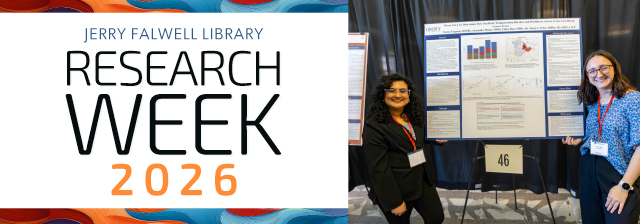
Posters
Category
Applied
Description
Adulterant compounds are added to illicit drugs to dilute their potency, mimic their effects, and cheapen production. Adulterants caffeine (21%) and quinine (20%) are most frequently combined with fentanyl. Despite their prevalence, there is limited empirical literature on the physical separation of adulterant mixtures. This study aimed to develop a traditional bench-scale separation scheme for isolating legal adulterants from a binary mixture. We hypothesize that differences in water solubility and extraction behavior of caffeine and quinine would enable their separation into distinct fractions. The separation scheme involved selective dissolution, gravity filtration, liquid-liquid extraction, drying, and solvent removal. Following physical separation, resolved caffeine- and quinine-rich fractions were characterized and identified by thin-layer chromatography (TLC), infrared (IR) spectroscopy, and melting point analysis. The workflow generated two analytically distinguishable fractions. The retained quinine solid was recovered in 71.1% yield. Both quinine and caffeine fractions exhibited melting-point ranges consistent with those of their pure counterparts. Infrared spectroscopy supported quinine assignment, while the organic-derived fraction displayed features consistent with caffeine. These findings support the proposed separation strategy and show that classical laboratory techniques can isolate fractions consistent with caffeine and quinine from a forensic model mixture.
Development of a Teaching-Laboratory Protocol for the Separation of Adulterant Compounds Caffeine and Quinine Used in Illicit Drugs
Applied
Adulterant compounds are added to illicit drugs to dilute their potency, mimic their effects, and cheapen production. Adulterants caffeine (21%) and quinine (20%) are most frequently combined with fentanyl. Despite their prevalence, there is limited empirical literature on the physical separation of adulterant mixtures. This study aimed to develop a traditional bench-scale separation scheme for isolating legal adulterants from a binary mixture. We hypothesize that differences in water solubility and extraction behavior of caffeine and quinine would enable their separation into distinct fractions. The separation scheme involved selective dissolution, gravity filtration, liquid-liquid extraction, drying, and solvent removal. Following physical separation, resolved caffeine- and quinine-rich fractions were characterized and identified by thin-layer chromatography (TLC), infrared (IR) spectroscopy, and melting point analysis. The workflow generated two analytically distinguishable fractions. The retained quinine solid was recovered in 71.1% yield. Both quinine and caffeine fractions exhibited melting-point ranges consistent with those of their pure counterparts. Infrared spectroscopy supported quinine assignment, while the organic-derived fraction displayed features consistent with caffeine. These findings support the proposed separation strategy and show that classical laboratory techniques can isolate fractions consistent with caffeine and quinine from a forensic model mixture.
